A Life in Languages
The late Professor Harvey Sharrer supports graduate students in his field
In the hush of a Lisbon archive, Professor Harvey Sharrer uncovered a parchment long forgotten: seven Galician-Portuguese love songs by King Don Dinis of Portugal. It was the second of only two surviving examples of the genre. In his honor, the 14th-century fragment was named the Pergamino Sharrer — the Sharrer Parchment.
Sharrer’s passion for this work and the desire to see it continue into the future was channeled into a bequest in his estate plans, providing fellowship support to graduate students who pursue Spanish and Portuguese studies at UC Santa Barbara, where he served as a professor for 43 years.
“I think the most important thing for Harvey was to assist students who had an interest in languages. Along with his research, he wanted to make sure his life’s effort had value for the next generation. He felt he had a duty as a professor to give back to the university,” said his brother, William.
A high school Spanish teacher in his hometown of Danville, California, encouraged Sharrer to pursue the language in college. To his sister, Elizabeth, he seemed to think in Spanish.
“Harvey spoke to me in 2014, when he set up his trust, about wanting students to take advantage of his endowment to travel to Spain, Portugal, and other countries to study languages. He wanted them to have the opportunities that he struggled to pay for,” said Elizabeth.
Sharrer’s expertise spanned Arthurian literature, medieval Romance lyric poetry, and digital humanities. He worked across Portuguese, Galician, Spanish, and Catalan literature. In 1970, he co-founded La Corónica, the first American journal devoted to medieval Iberian literatures, and his major project, the collaborative manuscript database PhiloBiblon, has received continued support from the National Endowment for the Humanities since the 1980s.
“Harvey Leo Sharrer will undoubtedly be remembered as a hardworking, indefatigable, cordial, affable man, always accessible and with a smile illuminating his face, an endless list of qualifications that speak to us of an upright person, of an exemplary professor who lived by and for research. His memory will always remain among us,” wrote Professor Charles Faulhaber, a colleague at UC Berkeley.
“I saw him as a quiet but very caring person,” said Elizabeth. “He wanted to do a lot for others. Even after retiring, he kept working because he loved it.”
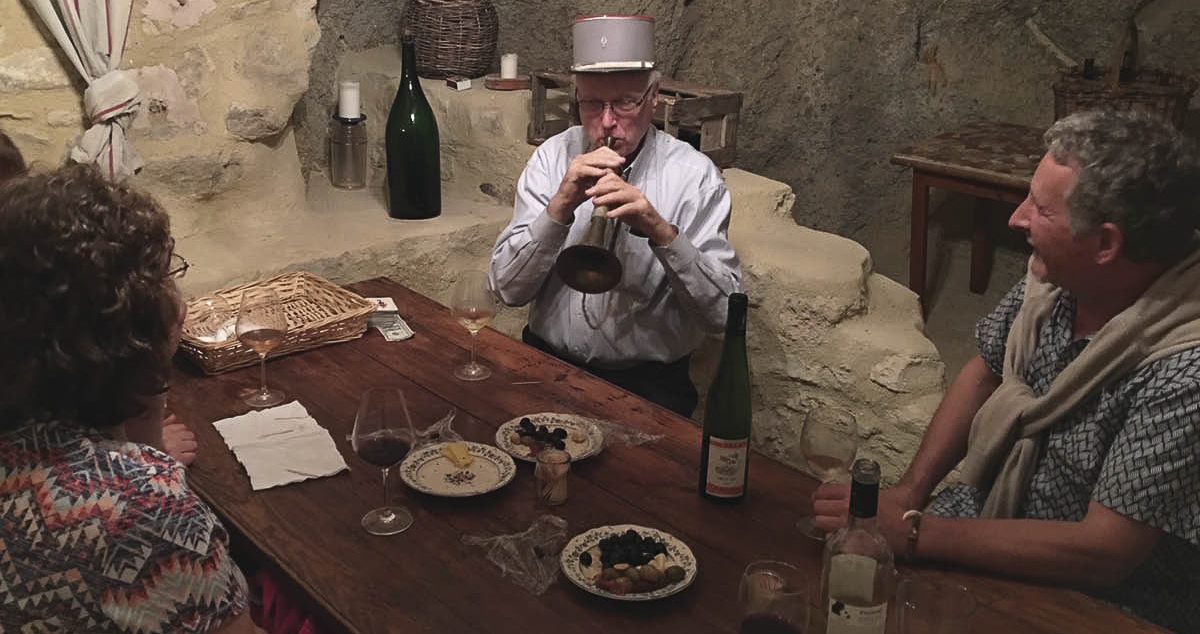
After his 2011 retirement from UC Santa Barbara, Sharrer continued to participate in conferences and travel the world. Sharrer and his siblings embarked on a three-week trip to France and Spain in 2017. Their taciturn brother turned chatty when they met up with his colleagues. In Barcelona, Sharrer surprised a tour guide with his flawless Catalan, which he had learned at age 18.
Although Sharrer passed away in 2024, his passion will live on in the graduate students who benefit from his support.
“Harvey Sharrer will be missed not only for his extraordinary scholarship, which will remain exemplary in medieval studies, but as a remarkable mentor for our students and young scholars, and as a judicious, generous, polite colleague to all members of the Department of Spanish and Portuguese,” said Professor Élide Valarini Oliver, department chair. “Harvey will be missed for all his extraordinary qualities, and his work will remain relevant for the future.”
Published November 2025

Along with his research, he wanted to make sure his life’s effort had value for the next generation. He felt he had a duty as a professor to give back to the university.
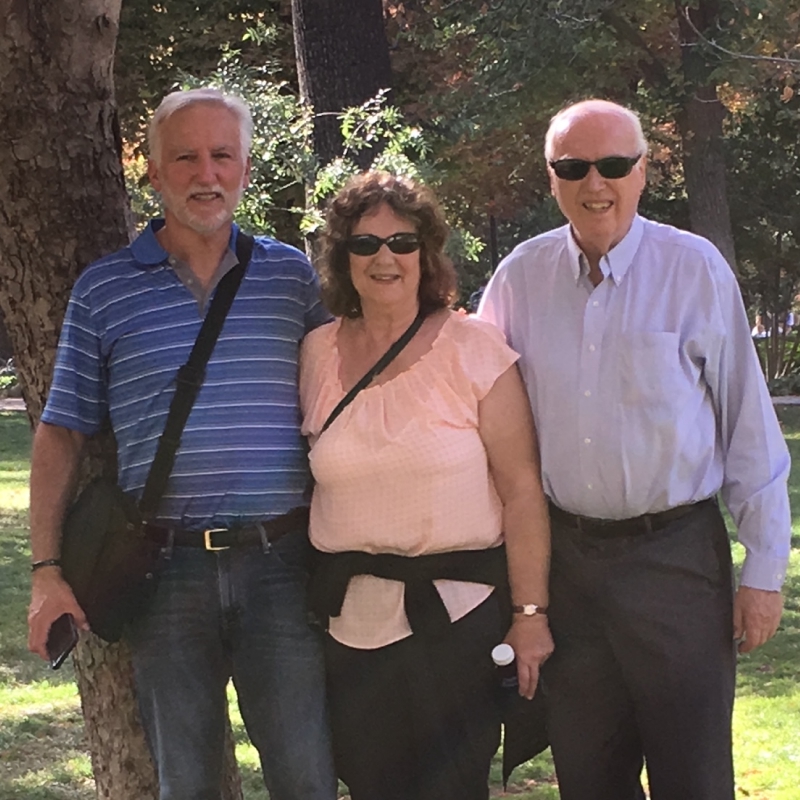
William Sharrer, pictured with Harvey and Elizabeth